





The best summer academic programs for medicine students do one of three things well: they put you in a real research lab, they let you practise clinical skills with your own hands, or they show you what studying medicine at university actually feels like. Few do all three. The right one for you depends on your age, your budget and, surprisingly often, your passport.
Below are seven programs worth applying to, with what each one offers and who can apply.
What makes a medical summer program worth it?
A good program gives you something real to do, not just lectures to sit through. Medical schools in the US look for 17 premed competencies set out by the AAMC, including teamwork, oral communication, critical thinking and scientific inquiry. A strong summer program lets you practise several of them.
Look for:
- Genuine responsibility, such as your own research question or a patient case to work through
- Contact with working doctors or scientists, not only teaching assistants
- Something to show for it: a poster, a written report or a letter of recommendation
- The right level for your age, so you’re stretched rather than lost
The 7 best summer academic programs for medicine students (2027)
Stanford Institutes of Medicine Summer Research Program (SIMR)
SIMR is one of the most competitive summer research programs for high school students in the US. You spend eight weeks in a Stanford lab, placed in one of eight institutes, working with a research mentor. A separate BioE Team Internship has students designing prototypes instead of working at the bench.
You must be 16 by the start date, a US citizen or permanent resident, and living and attending high school in the US.
OSP Medicine & Clinical Skills Summer School (Oxford)
OSP’s Medicine & Clinical Skills Summer School runs from 1 to 14 August 2027 in Oxford, for students aged 14 to 18. Scholars learn how doctors reason through a diagnosis, practise history-taking and the ABCDE approach to emergencies, and work through a simulated emergency in a clinical simulation lab. Over the fortnight, each scholar builds a running patient casefile and presents it.
Unlike most of the programs on this list, there’s no citizenship requirement, and scholars come from more than 40 nationalities and stay in Oxford college accommodation.
Rockefeller University Summer Science Research Program (SSRP)
SSRP runs in June or August each year at Rockefeller’s science outreach lab in Manhattan. Around 32 to 40 students work in teams on mentored research projects, roughly 9am to 5pm, Monday to Friday.
It costs nothing to apply or attend, which makes it one of the few genuinely free medical summer programs for high school students. You don’t need to live in New York, but Rockefeller can’t help with housing.
Boston University RISE
RISE is a six-week program for rising seniors. The Internship track puts you in a university lab for 40 hours a week. The Practicum mixes lectures with group research, including a computational neurobiology option that suits future doctors interested in the brain.
It’s open to US citizens and permanent residents in their junior year.
Georgetown Medical Academy
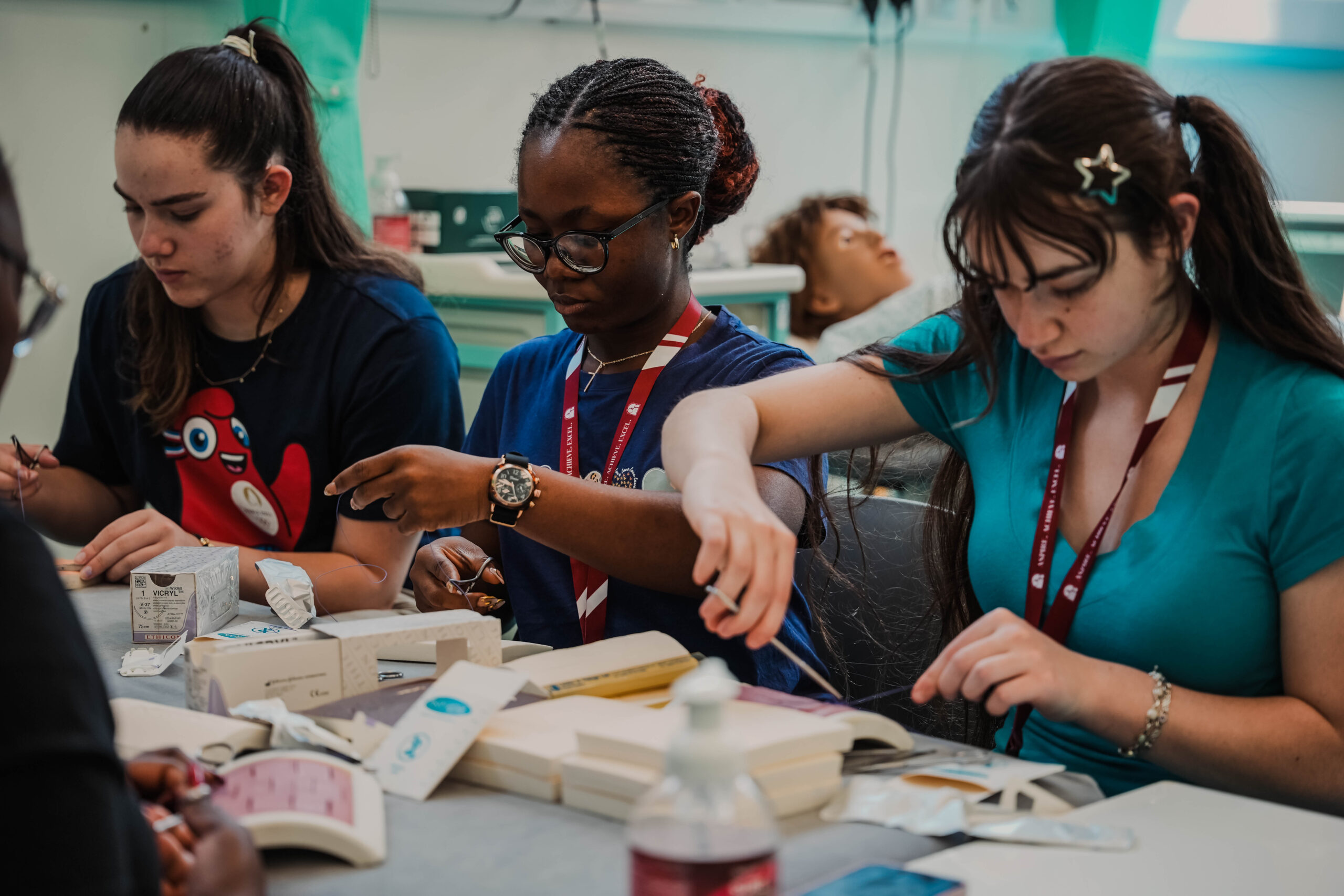
If you want to get your hands on clinical skills, Georgetown’s one-week Medical Academy is a good option to consider as well. Students try suturing, orthopaedic casting, dissection and a patient simulator, meet Georgetown medical students and finish with a capstone project. The minimum age to apply is 15.
Tufts Mini Med School
Tufts runs short health science programs at its Boston Health Sciences campus. Mini Med School combines classroom teaching with labs and simulation, and you can join as a commuter or a residential student.
You don’t need any prior experience. It’s a sensible first step if you’re curious about medicine but not sure yet.
NIH Summer Internship Program
The NIH Summer Internship Program places students in research labs across the National Institutes of Health, with a stipend. It’s one of the best-known summer medical internships for high school students, but it’s mainly for college students.
Most high school students aren’t eligible. Seniors qualify only in limited cases tied to their age and how close they live to an NIH campus, so check the rules before applying. It’s in person, and NIH doesn’t provide housing.
Research, clinical or university-style: which type suits you?
Most medical summer programs for high school students fall into one of three groups. Pick the one that matches what you want to find out.
- Research programs (SIMR, SSRP, RISE, NIH) suit you if you want to find out whether you enjoy science as a career.
- Clinical skills programs (Georgetown, Tufts) suit you if you want to test whether you like the hands-on side of medicine.
- Residential academic programs (OSP in Oxford) suit you if you want to see medicine from every side in one summer. Over two weeks in Oxford, you learn how doctors reason through a diagnosis, handle a simulated emergency in a clinical simulation lab, and build and present your own patient casefile. You live and study alongside students from more than 40 nationalities, and unlike most other programs, there’s no citizenship requirement.
Are medical summer programs worth it?
Yes, if you treat them as a test of your interest rather than a box to tick. In the US, medicine is a graduate degree, so nobody expects a high school student to arrive with clinical experience. What a program gives you is evidence, for yourself first, that you like the work.
The AAMC itself suggests using summers for medically related experience such as research, volunteering or shadowing, and advises starting your search early because places are competitive.
There’s also a bigger reason to explore now. The AAMC projects a US shortage of up to 86,000 physicians by 2036. The field needs people who’ve thought hard about whether medicine is right for them, and a summer is a low-risk way to find out.
When should you apply for a medical summer program?
Earlier than you think. Most programs open applications in late autumn or early winter, and the most selective research programs usually close in January or February.
Start shortlisting in the autumn before the summer you want to attend, and check each program’s website for its current deadline.
Where to go from here
There are several ways to explore medicine before university, from research placements and summer internships to clinical skills programmes. For students interested in combining academic study with practical experience, the Medicine & Clinical Skills summer programme in Oxford at OSP Scholars is one option to consider.
The programme introduces students to areas such as clinical reasoning, medical ethics and patient case studies, offering a closer look at the academic and practical sides of medicine.
